Some stains need professional help

When and why to visit the dry cleaner ?

Modern-day washing machines are true wonders of technology, able to clean and care for all manner of fabrics with speed and efficiency. However, they cannot do it all. Some items are simply not machine-washable for a variety of reasons, such as their delicate composition, their reaction to water, their bulkiness, or their decorative details. In this case, the ideal solution is often the dry cleaner. These laundry pros have the techniques and equipment necessary to make sure your textiles come out clean and cared for. So, when should you entrust your laundry to the dry cleaner?


No Water

Water is not always your garment’s friend. Certain items should not be washed in water, either because of their composition (suede, leather, fur) or because of their coloration (dye, glue, paint). But never fear, the dry cleaner is here! Dry cleaning is first and foremost dry, meaning the cleaning process is entirely water-free.


Deep stains

Some stains simply will not come out no matter how hard you try. In this case, the dry cleaner may be your best bet. Dry cleaning involves special solvents that can remove even the most tenacious spots and smears so you can stop trying to salvage your favorite shirt and get back to wearing it instead!


Stubborn scents

Unfortunately, clean does not always mean sweet-smelling. That basketball jersey or suit jacket may be dirt-free, yet give off a less-than-desirable odor. Happily, dry cleaning can take care of all the unpleasantness and leave your garment smelling every bit as fresh as it looks.


A longer life

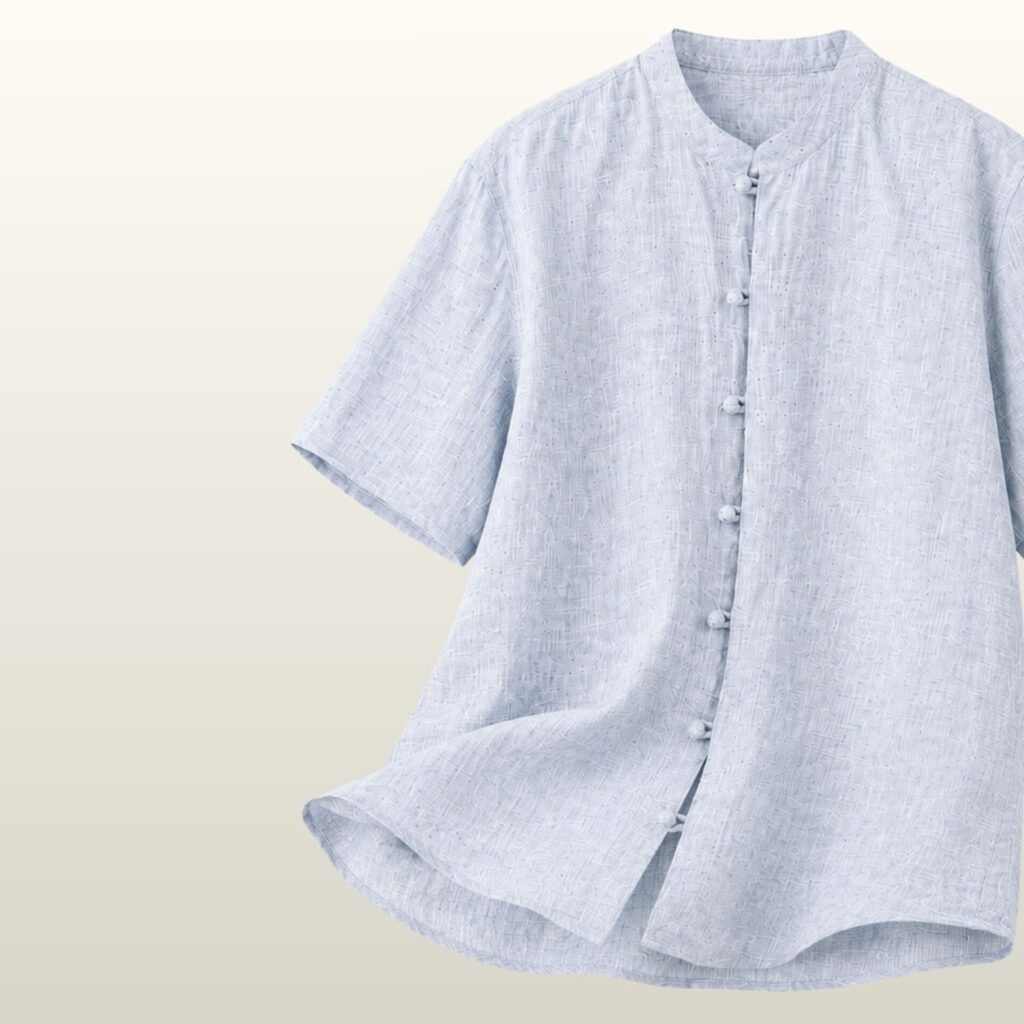
While today’s wash cycles can be fine-tuned to clean your clothing with little to no damage, certain fabrics are more sensitive than others to the rotations of the washing machine. Wool, cashmere, silk, and linen are all good candidates for dry cleaning, allowing you to enjoy them for as long as possible.


Delicate decor

That sequined dress can’t be put through the laundry. Neither can that beaded pillow cover. Textiles with fragile decorative features (feathers, buttons, glitter, etc.) should never be machine washed. If hand washing is not an option, then entrust your decorated pieces to the dry cleaner, who will know exactly how to get them clean without causing any damage.


Too big to launder

Unless you own an industrial-size washing machine, it is unlikely that your duvet can be washed at home. This is probably a good thing, since duvets and other bulky items require special care that can only be found at the dry cleaner. You know where to go!


For more tips on how to care for your favorite clothes and linens, visit our special fabrics section.

Laundry through the ages

Into modernity and beyond

This article is the conclusion to our short series, “Laundry through the ages.” Last time, we looked at the washing practices of our medieval ancestors and traced their progress through the innovations of the 19th century. This time, we’ll look at the transformations of the 20th century and take a peek at the technology shaping the future of laundry. As always, happy reading!

The 20th century
With the arrival of electricity, the laundry process gradually became less time- and labor-intensive than in ages past. The first electric-powered washing machine, called “Thor,” was patented in 1907 by the Hurley Machine Company, featuring the famous rotating drum invented by the American James King in 1851. While bulky and rather dangerous to use, it paved the way for the first domestic automatic models featuring spin dryers instead of hand wringers, which appeared on the market in the 1930s.

Few households had the means necessary to acquire one of these machines, but it would not be long before mass production would spark its democratization, putting this feat of technology within wider reach. Following World War II, automatic washing machines swiftly grew in popularity, adding numerous innovations such as timers, varied load sizes, and multiple wash cycles. The first electric spin dryers appeared mid-century, as did commercial laundromats. Detergents also underwent a transformation that saw the animal fat and wood ash of the past replaced by synthetic detergents and fabric softeners.

The 21st century 
With the rise of smart technology and artificial intelligence, the way we do laundry continues to evolve. Rising environmental awareness has already led to improvements in energy efficiency and the development of biodegradable detergents, while increasingly intelligent washing machines are now able to automatically adjust water levels, cycle selection, and product quantities.

Today, the washing machine has become ubiquitous in wealthy countries, with even the most modest households benefitting from its time-saving benefits—whether at home or at the local laundromat. And yet, it should be kept in mind that on a global scale, most people do not have access to a washing machine; roughly 60% of the world’s population still does laundry by hand.

The future of laundry will therefore likely revolve around two objectives:

1) leverage the latest technological progress to make the task of washing clothing ever more efficient, convenient, and sustainable

2) extend the revolutionary power of the washing machine to more households around the world, liberating them from the burden of manual washing.

We hope that you have enjoyed this brief look at laundry through the ages. If you missed any of the previous articles in this series, you can find them here  and here.

White as snow

Follow these tips to keep your white laundry clean and bright.

Worried about your white garments and linens losing their sparkle? Have no fear—with the proper care, you can avoid all of the classic pitfalls of white laundry. Whether your concern is removing stains, rectifying yellowing, avoiding color transfer, handling white-and-color blends, caring for special fabrics, brightening home linens, or all of the above, you’ve come to the right place.


Start with sorting

White fabrics require different treatment according to their type. Referring to the care label, sort your white items according to the recommended temperature, taking care not to mix together pure whites and white-and-color blends.


Consider a dedicated detergent

In most cases, an all-purpose detergent is sufficient to clean your white laundry. However, you may wish to choose a dedicated detergent formulated specifically for whites. These have the additional benefits of enhancing whiteness and avoiding yellowing.


To bleach or not to bleach?

We often associate chlorine bleach with impeccable whiteness, but bleach comes with its own share of risks, including yellowing. Mild bleach suited to white fabrics is a good compromise, as are laundry boosters. If stain removal is your concern, try soaking your clothes in a mixture of white vinegar and water for one hour prior to washing. For targeted stain removal such as yellow sweat stains, nothing beats baking soda. Make a paste using a bit of water, apply to the stain, and allow to sit for 30 minutes. Gently scrub with an old toothbrush or clean cloth, then launder as usual.


Blue to the rescue!

If your white laundry has become gray or yellow for any reason, don’t lose hope. Bluing, or laundry blue, is a whitening agent that counteracts yellowish tints and dinginess, restoring white clothing to its original purity. Add sparingly (it is a pigment, after all), according to the instructions, via the fabric softener tray.


Choose the proper cycle

Certain washing machines propose a “white” cycle, which generally involves a higher temperature and longer wash. However, whether this cycle suits your whites depends on the care instructions on the label, so be sure to check before choosing. If the label indicates a gentle cycle or lower temperatures, then proceed accordingly. Fragile items such as lace may need to be washed by hand.


Dry it right

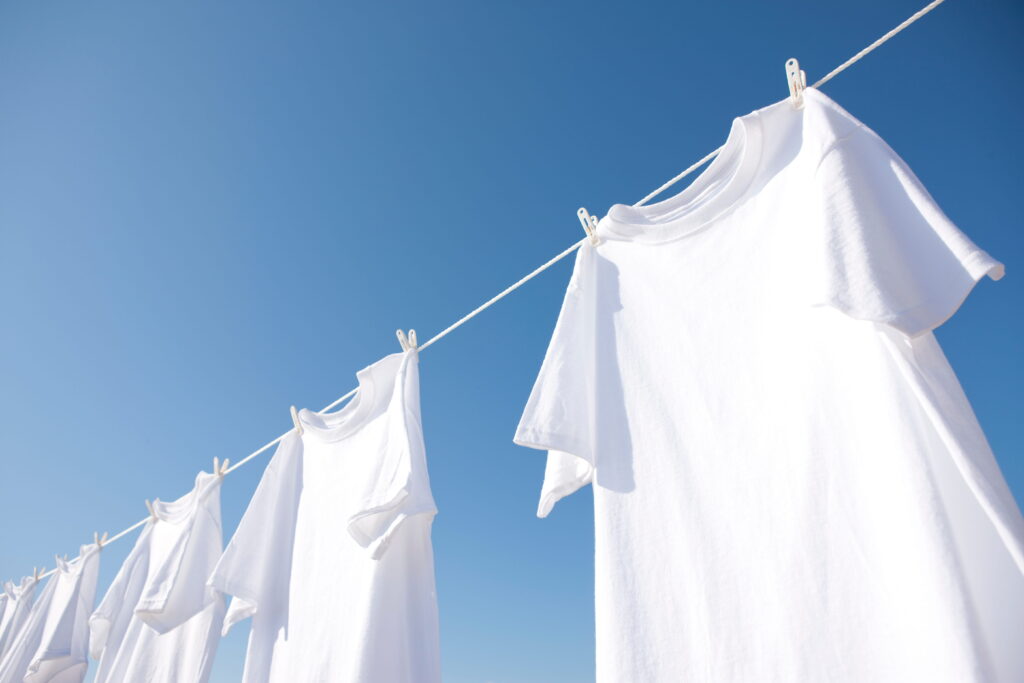
White laundry loves to be dried in the sun, whose bleaching properties add an extra dose of sparkle (just don’t overdo it, as excessive sun exposure can lead to yellowing). If you don’t have access to an outdoor clothes line, you can either dry your whites on an indoor rack or use low-heat tumble drying if the instructions printed on the care label permit it. Be sure to dry thoroughly before storage.


For more tips on how to care for your favorite clothes and linens, visit our special fabrics section.
Send this to a friend