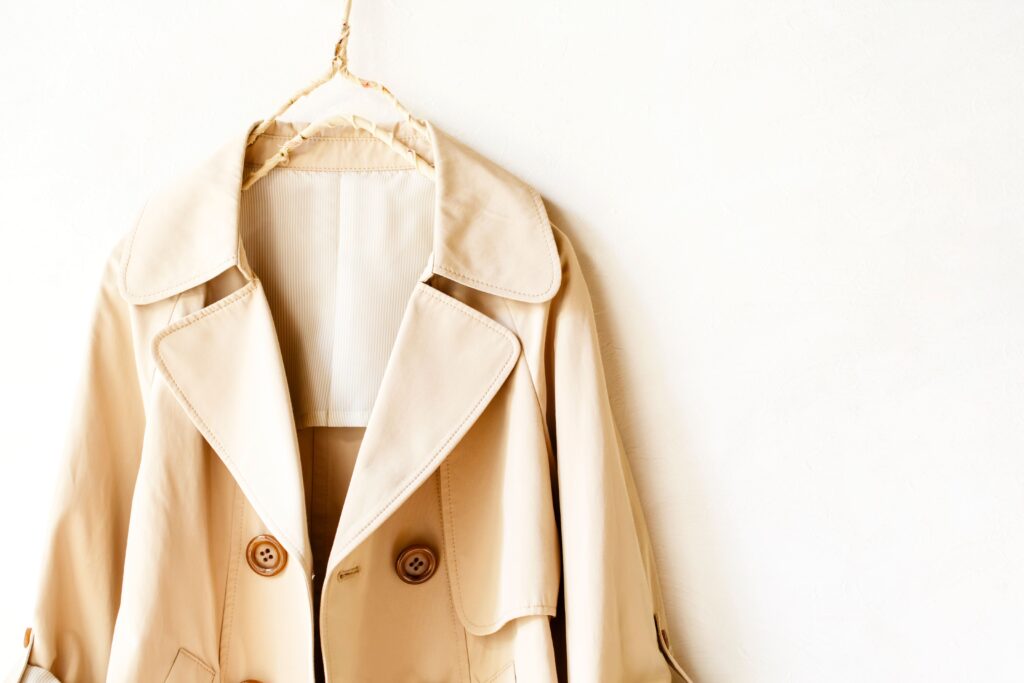
Chilly mornings and warm afternoons, often with a bit of rain or wind, herald the arrival of the mid-season. With it comes an array of light jackets and in particular the timelessly chic trench coat. We often forget that coats and jackets require the same care and attention as other garments—all the more if they are subjected to wind, rain, dust, and stains. So this year, be sure to give your mid-season outerwear a little TLC. Your efforts are sure to be worthwhile.
Mid-season fashion
“Mid-season” is a somewhat confusing term, as it does not refer to the meteorological seasons, but instead to the fashion seasons. All major designers have traditionally focused on two key moments in the year: Spring/Summer and Autumn/Winter. Mid-season, then, covers the time in-between these two peak periods, when many retailers hold sales to reduce their left-over summer or winter inventory while offering smaller collections that reflect the variable weather conditions of spring and autumn. Whether water-resistant to fend off the rain or lightweight for easy layering, mid-season coats and jackets are both smart and stylish, as well as incredibly diverse: lightweight down, denim, quilted, leather, softshell, parka, car, windbreaker… the possibilities are endless.
Did you know?
The iconic trench coat is undoubtedly the star of mid-season outerwear. The name “trench” is literal, as the coat’s fascinating history reveals. The impetus for its development was war, in particular British officers, whose heavy outerwear proved impractical and cumbersome. Building on the waterproof military wear designed by John Emary in the 1850s, Thomas Burberry invented “gabardine,” a lightweight, breathable, waterproof fabric which he fashioned into raincoats for the British army at the turn of the century. The military recognized the benefits of gabardine around the same time that war tactics were shifting away from brightly colored uniforms toward camouflage, including the color khaki…
The trench coat as we know it came into its own during World War I. By 1916, British officers had adopted it in essentially its modern form: khaki-colored and double-breasted, with a fitted, belted waist and a knee-length flared hem, closed with buttons and adorned with various flaps, pockets, and rings for military accessories. Allied soldiers soon adopted the elegant yet useful trench, which swiftly rose in popularity among the civilian population on either side of the Atlantic, amplified by both patriotism and, later, the glamorous appeal of Hollywood as the trench began to appear in the era’s most successful movies. Today, the trench enjoys a special place in the wardrobe as a source of endless inspiration for designers and an enduring mark of good taste.
Caring for your jackets
Trench coats and other mid-season outerwear are lighter than their winter cousins and thus easier to clean and care for. As always, the best place to start is with the label since some jackets may be dry clean only.
For those that are machine-washable, follow these simple steps:
• Empty all pockets, zip all zippers, and remove any extraneous items
• Choose an appropriate detergent according to your jacket’s fabric
• Avoid fabric softener, which can be harmful to certain materials, particularly feathers
• Set your machine to cold or warm according to your label
• Pick the right setting: delicate is usually best
• Skip the dryer, which can cause damage. Instead dry your jacket flat or on a hanger in a well-ventilated area
• Once your jacket is fully dry, it’s ready to be stored safely for future enjoyment.
For more tips on how to care for your favorite clothes and linens, visit our special fabrics section.